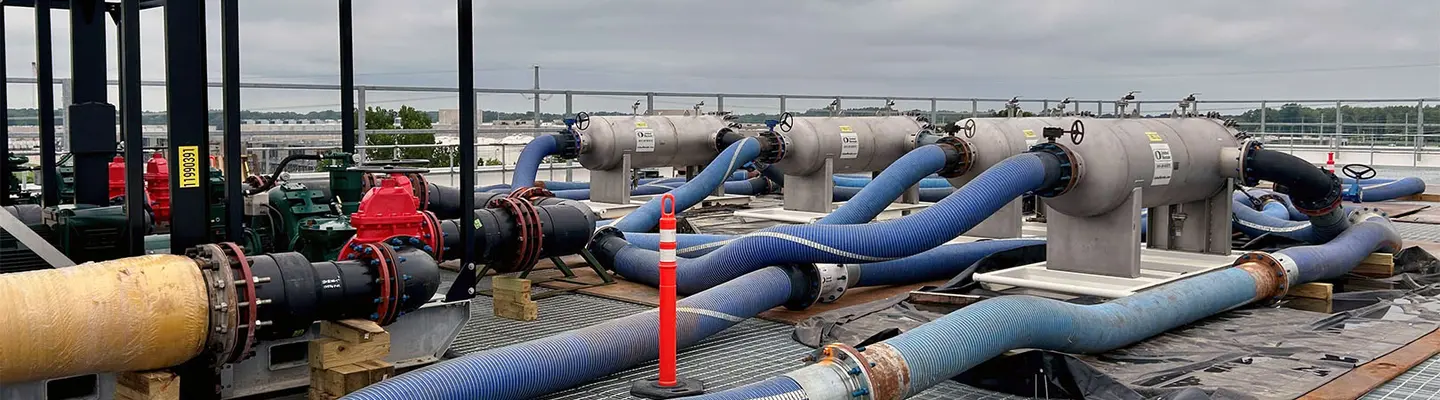
Mechanical flushing is a critical-path activity in facility commissioning, particularly for data centers, industrial plants and large commercial buildings where system cleanliness impacts reliability and performance. Any delay in flushing can stall commissioning and increase time to revenue. But shortcuts can introduce unnecessary risk to the system, reduce the quality of the flush and cause rework that pushes out the schedule.
With the right flushing design and execution strategy, mechanical contractors can potentially compress the flushing timeline without cutting corners to deliver a clean system on time and help keep commissioning on track.
Plan far enough in advance
Schedule acceleration begins with optimizing the flush plan well before pumps are mobilized. The best plan depends on the job, as every flush is different. Two data centers can look similar but need very different flush plans.
Choosing the best plan requires a thorough evaluation of tie-ins, valves, site access and project requirements, as well as accurate determination of the required flow velocities. Flow models used by United Rentals help show where the water will go, what flow is necessary, what pumps and filters are required and where any problems might occur. These models may be easier than marked-up drawings for contractors to understand.
Equally important is early coordination with commissioning agents and stakeholders. Aligning on cleanliness criteria, sampling procedures and acceptance thresholds helps prevent rework and reduces the risk of pauses during critical flushing windows.
Consider phased flushing
Breaking large systems into smaller, manageable segments can significantly improve flush efficiency in some cases. Phased flushing may allow teams to:
- Begin flushing completed sections while construction continues on other sections.
- Isolate problem areas without halting the entire flush.
- Validate cleanliness incrementally rather than waiting until the full flush is completed.
Flush multiple loops simultaneously when feasible
Simultaneously flushing multiple loops when the system design allows it shortens the overall schedule. It requires detailed planning around pump sizing, flow distribution and loop balancing to maintain adequate flow velocities across all loops.
Key considerations include:
- Proper pump sizing to support simultaneous operations.
- Independent filtration systems to maintain cleanliness standards in each loop.
- Clear system isolation to prevent cross-contamination.
Optimize equipment layout
Strategic placement of pumps, filtration skids and temporary piping reduces inefficiencies during operation. Poorly planned layouts can introduce unnecessary friction losses, limit flow velocities and complicate access.
Well-planned layouts can:
- Minimize hose and pipe runs to maintain target velocities.
- Provide easy access for filter changes and inspections.
- Reduce setup and teardown time between phases.
Extend operating hours when possible
One of the most straightforward ways to accelerate flushing is by increasing runtime. When site conditions, labor availability and safety protocols permit, extending operations beyond standard shifts and even operating around the clock can reduce restart inefficiencies and dramatically compress schedules.
Reduce downtime between steps
A common source of delay is the downtime between flushing, rinsing, refilling and turnover. These transitions often involve waiting on approvals, equipment adjustments or crew availability.
These steps can minimize the gaps:
- Pre-stage equipment and materials for the next phase.
- Align inspection and approval windows with active operations.
- Use dedicated crews or overlapping shifts to maintain continuity.
Water reuse can also help limit delays between phases. On large systems, crews may lose time draining, refilling, hauling water, staging storage tanks, coordinating discharge or waiting for fresh water. When project specifications, water quality requirements and discharge rules allow it, filtering and reusing water can help crews move from one phase to the next more efficiently.
Benefits of partnering with United Rentals
Accelerating mechanical flushing requires deep engineering and operational expertise. An experienced turnkey flushing partner with in-house engineers can provide flush plans that optimize speed and cost without adding risk or compromising quality.
United Rentals offers not only an extensive, best-in-class fleet of specialty flushing equipment available from branches throughout North America but comprehensive engineering support services as well as turnkey execution that include:
- Design and engineering
- Drawings and modeling
- Equipment installation and operation
- Monitoring and documentation
- Chemical cleaning and passivation
- Equipment removal
- Turnover to system owner
The flushing team has successfully performed engineered flushes from 100 gpm to 60,000 gpm.
As commissioning schedules continue to tighten, flush efficiency becomes increasingly critical. The right flushing equipment, combined with expert planning and execution, can make the difference between costly delays and a timely transition from construction to operation.
 Facebook
 X
 Linkedin
 Email
 Print
 Copy Link
 RSS Feed
